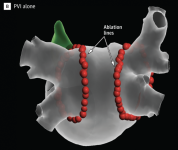
Absolutely. The research group I'm a part of works primarily on pacemakers and ablation procedures. Outcomes seem quite good, though there is always room for improvement, and there are lots of new ablation platforms and technologies that are gaining traction, including "pulse-field ablation." I have a few friends outside work that have managed their afib successfully with cardioversion-ablation. There isn't a whole lot known about what actually leads from apnea to afib, but there are a bunch of nerves in the pulmonary arteries that shuttle blood between the heart and lungs, and those nerves can sense oxygen (or the lack of it during apnea) and blood pressure, and lead into the heart where they can affect heart rhythm. There are other factors at play, as the heart can contain "circuits" of "self-firing" loops.