


Related to the thread about estate pipes. I had this question. Taking pipes made by small-scale artisans out of the equation, as for industrial pipes. Do you think the pipes made today are better, or are those made decades ago better?







Related to the thread about estate pipes. I had this question. Taking pipes made by small-scale artisans out of the equation, as for industrial pipes. Do you think the pipes made today are better, or are those made decades ago better?





mixed and every old is better is more likely the survivor paradox i.e. the pipes that stayed around were most likely the cream of the crop or the pipes that didn't end up in the trash.Related to the thread about estate pipes. I had this question. Taking pipes made by small-scale artisans out of the equation, as for industrial pipes. Do you think the pipes made today are better, or are those made decades ago better?


There were good pipes and bad made decades ago. Same with the pipes made today. Good artisans and not so good. It's up to you to determine your biases and choose your purchase with care. So, educate yourself.Do you think the pipes made today are better, or are those made decades ago better?

Related to the thread about estate pipes. I had this question. Taking pipes made by small-scale artisans out of the equation, as for industrial pipes. Do you think the pipes made today are better, or are those made decades ago better?

There’s good and bad from both eras.
I like old(er) pipes - specifically old Britwoods and Danish-era StanwellsSturgeon's Law applies (for those of you who are unfamiliar with Sturgeon's Law, the metric is "90% of everything is crap".). Most of the cheap crap was happily used until it died, leaving a higher percentage higher grade, more durable goods, which gives the illusion that the yesteryear overall average of quality was higher than what is being made today.


Related to the thread about estate pipes. I had this question. Taking pipes made by small-scale artisans out of the equation, as for industrial pipes. Do you think the pipes made today are better, or are those made decades ago better?

@georgedThe survivor thing definitely applies, but that is independent of what mass-producers were capable of at their quality peak.
Which is that "then" stuff is definitely superior to anything made today.
Not just slightly, but dramatically so. I've handled/worked on hundred-year-old specimens from English makers that I'd feel comfortable challenging any carver alive today---never mind a factory---to replicate without having to re-discover how it was done originally. (Meaning make repeated attempts and sacrifice significant material from several dozen hours of experimentation, re-inventing specialized tools and techniques, and so forth.)
To think that such pipes were once made by anonymous workers on a 9 to 5 production line as a standard catalog item is mind blowing.
Although your question is directed for George, in reading old pipe magazine articles, pipe manufacturers prided themselves on retaining skilled workers and had a hierarchy of journeyman - that is, a person learned a skill and moved up only when they were proficient enough to do so. These machines also required care, maintenance, and skill to operate. Employee retention also seemed to be a priority. So, although the worker was anonymous to the buyer, they were not anonymous to the employer. Skilled labor has changed much today - people come and go and machines do much much more.@georged
Why do you think this is? That is to say - can you speculate as to why anonymous workers were able to turn out such high quality pipes

@georged
Why do you think this is? That is to say - can you speculate as to why anonymous workers were able to turn out such high quality pipes
We have the example of Ashton and Les Wood who were once part of the Dunhill team.Although your question is directed for George, in reading old pipe magazine articles, pipe manufacturers prided themselves on retaining skilled workers and had a hierarchy of journeyman - that is, a person learned a skill and moved up only when they were proficient enough to do so. These machines also required care, maintenance, and skill to operate. Employee retention also seemed to be a priority. So, although the worker was anonymous to the buyer, they were not anonymous to the employer. Skilled labor has changed much today - people come and go and machines do much much more.
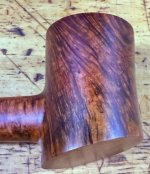

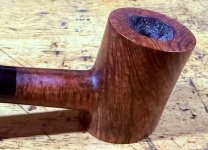
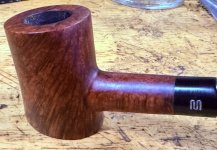

Your answer and that of @telescopes make sense to me. The value of apprenticeship and time in the trade (experience gained over time) are likely the key factors. Sadly both seem to be undervalued in today’s world.One quick answer: a learning curve that generally started at 14.