




Wikipedia states the following definition for the term engineering:
Engineering is the application of scientific, economic, social, and practical knowledge in order to invent, design, build, maintain, research, and improve structures, machines, devices, systems, materials and processes.
In two current threads objections have been raised to the use of the term when applied to the making of pipes. Some feel that it's an inflated term, and insult to engineers. Having grown up with a father who was an aerospace engineer, I would agree that the issues involved are simpler than the work he did designing life support components for the Mercury, Gemini and Apollo programs. But my father saw engineering in all manner of things, both natural and man made and he taught me to do the same. I have yet to hear anyone claim to have witnessed a beaver using a slide rule to aid in the construction of a dam.
To the extent that we're no longer seated around a pile of smoldering leaves, sipping smoke through reeds, I posit that engineering has been involved.
Over the years, a great many materials have been tested in the making of pipes. And there have been many developments in the system of construction. It's been a long time since pipe makers used bone tenons as a standard device for connecting the stem to the shank. And what about reverse calabashes? No engineering involved there?
Many makers put a lot of effort into improving their products and I include a smattering of patent applications as examples of the effort involved. Granted these are pretty old, but it's the era where I've done most of my study and they're easy to grab.


They don't look essentially different from the sketches that my father made for valves or other components, including the foil air bearing he invented that is an integral part of most turbines in use today.
What about custom tools designed by pipe makers to drill specific chamber shapes? No engineering there either?
How about calculating the effect of bowl geometry on smoking properties?
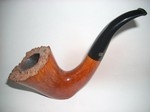
And did you know that French carvers engineered a way to drill on a curve so that they could create those lovely swans neck pipes that have been a topic of discussion here? They kept that a closely guarded secret.
Chamber Geometry
more chamber geometry
I'm interested in hearing others responses
Engineering is the application of scientific, economic, social, and practical knowledge in order to invent, design, build, maintain, research, and improve structures, machines, devices, systems, materials and processes.
In two current threads objections have been raised to the use of the term when applied to the making of pipes. Some feel that it's an inflated term, and insult to engineers. Having grown up with a father who was an aerospace engineer, I would agree that the issues involved are simpler than the work he did designing life support components for the Mercury, Gemini and Apollo programs. But my father saw engineering in all manner of things, both natural and man made and he taught me to do the same. I have yet to hear anyone claim to have witnessed a beaver using a slide rule to aid in the construction of a dam.
To the extent that we're no longer seated around a pile of smoldering leaves, sipping smoke through reeds, I posit that engineering has been involved.
Over the years, a great many materials have been tested in the making of pipes. And there have been many developments in the system of construction. It's been a long time since pipe makers used bone tenons as a standard device for connecting the stem to the shank. And what about reverse calabashes? No engineering involved there?
Many makers put a lot of effort into improving their products and I include a smattering of patent applications as examples of the effort involved. Granted these are pretty old, but it's the era where I've done most of my study and they're easy to grab.
They don't look essentially different from the sketches that my father made for valves or other components, including the foil air bearing he invented that is an integral part of most turbines in use today.
What about custom tools designed by pipe makers to drill specific chamber shapes? No engineering there either?
How about calculating the effect of bowl geometry on smoking properties?
And did you know that French carvers engineered a way to drill on a curve so that they could create those lovely swans neck pipes that have been a topic of discussion here? They kept that a closely guarded secret.
Chamber Geometry
more chamber geometry
I'm interested in hearing others responses