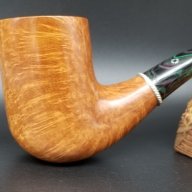
As I understand it, all briar usable for pipes is obtained from a burl on the root of a heather shrub that grew in poor soil on the rim of the Mediterranean and
no place else.
Then from that burl a huge percentage of the wood is waste, and what remains in order to be smokeable has to be soaked in water, or steamed, or boiled in oil, of other wise cured to drive out nasty tasting tannins.
Then the briar has to age for a minimum of a year or two, and ten is better.
Doug’s great grandfather and Doug face identical problems breaking in new briar pipes.
Not most, but each and every manufacturer of briar pipes, even Marxman and Bertram, had break in instructions in their literature.
The reason was until the new pipe has been smoked a few times it’s not going to be as good as it eventually gets, because the customer does the last little bit of driving out the tannins from the wood. Those taste bad. The makers don’t want unhappy customers.
I’ve found the better and older the briar the easier the break in period. Even today some Danish pipes use young briar that is painful to break in.
This three quarter century old Marxman wax basically unsmoked when I unwrapped it a couple of days ago and three smokes has more or less broken it in, but even the best of the best old Algerian benefits from a break in period.
View attachment 382110
Does a careful break in period help prevent burn out?
If cannot hurt.

A reason I think the majority of pipe smokers disregard any break in period is that eighty or so years ago there were fifty to a hundred times more pipes made, and the handful of surviving makers can and do only buy the best of the best briar.
In 1940 Kaywoodie alone had to select 11 million usable burls a year.
Today Dr Grabow selects 200,000.
The good Doctor Grabow gets to pick, you know?.














 You now have more opinions taking one side or the other. Might be an interesting experience if you pick a couple of pipes, cake in one, none in the other and report back in a few months years maybe.