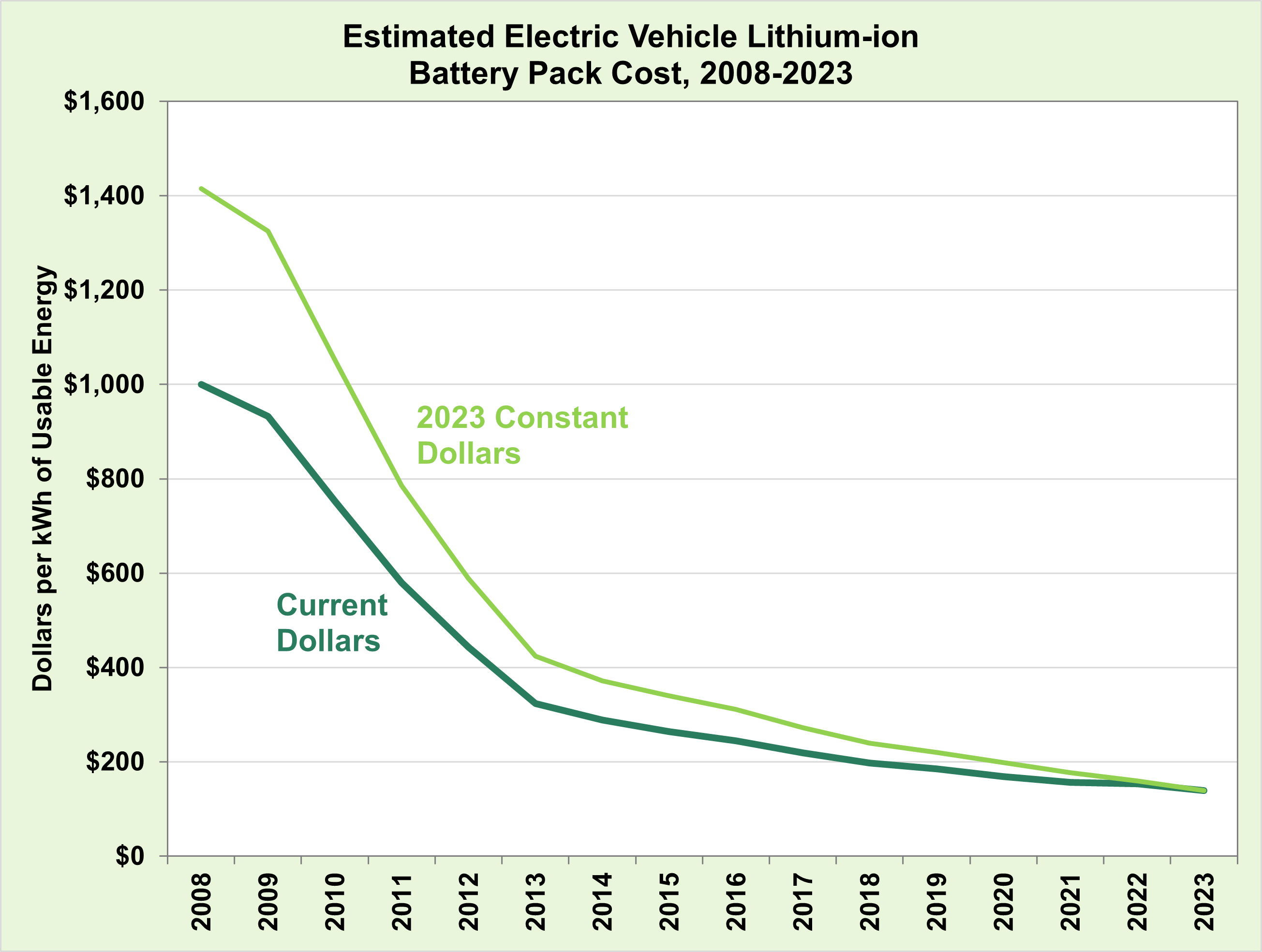
Until they can figure out how to actually rapidly recharge batteries, internal combustion engines are here to stay.
Oregon has tried to go gangbusters on EV, but those pesky mountains keep screwing everything up. EV semi trucks are a non-starter in Oregon, and that's even if we had the power grid capacity to support them (which we don't).
EV farm equipment has a different liability... Weight. Compacting soil isn't good for fields. Here again, charge time is also an issue.
Lightweight, quick-change, cold-resistant, swappable batteries might be the wave of the future.
The ugly truth remains. Yes, by driving an EV, you are not emitting carbon (this ignores all the carbon used to produce the car and it's batteries), but the extra weight of EV's takes it's own toll on tire rubber, and that is the single largest producer of micro plastics in our water supply.
If you drive an electric vehicle out of some misguided attempt to save the planet, you are guilty of green-washing, whether you realize it or not. Without a 'clean' power grid, the emissions offset is negligible.
Wind and solar farms are not the answer. Nuclear is. I'm still waiting for the cold fusion plants of the future we were promised in the '80's.
This is why Ford’s new 4 door E Ranger is so revolutionary.
It will do 0-60 faster than a Boss 429.
It will be many thousands cheaper than the same gasoline model on the lot.
And it has more range than the driver’s kids in the back allow.

Only 24 years separate a Model T from a 32 Ford V-8.
By the time I was born in 1958 my father had two magic carpet vehicles in our drive that would cruise all day at modern speeds and needed gassed every 200 miles.
People have been waiting for cold fusion all my life.
Fission reactors are so god awful expensive and subject to so many do gooders opposing them they died at Three Mile Island.
But when wind energy was new in the seventies you’ll see old movies with wind farms. Those windmills cost 5 million dollars each then. While we slept the last fifty years so to speak, those windmills cost 2.5 million and the lucky farmer who gets a lease has way more money to farm.
Xxxxx
A single modern, onshore wind turbine, with an average annual output of about 6,000 megawatt-hours (MWh), can provide enough electricity to power roughly 2,400 electric cars annually (at 2,500 kWh/car)
. However, the actual number varies depending on the turbine's size, the average energy consumption of the electric vehicles, how much energy is produced, and how the power is managed.
Xxxxx
For the last five or so years new build wind has become cheaper than nuclear—-two cents a kilowatt hour.
Plus wind goes where the farmers are delighted to see them. They sound like free money.
Electric cars virtually always (unless on long trips) charge during off peak hours at home.
Our children’s children will ask us, about our cars like my kids love to hear me talk about filing worn points, vapor lock, carburetors, and putting ash pans under cars in the winter so maybe they’d start.:
Gas cars and light trucks aren’t dead.
But whatever you see now on the lots is the last generation.



 " emoji at the end to indicate some sarcasm. Just 2 cents.