I worked on a number of commercials with one of Herbert Hoover’s grandsons, Richard Hoover, who was a commercial director and one of the nicest guys I ever met.
Knew what he was doing, so no histrionics, just quiet expertise.
To this day, the School of Journalism at the University of Missouri Columbia has an arrangement to have students intern at The Index newspaper at Hermitage Missouri and now and again a young person discovers the works of Myrtle Cahow “Ma” Agee, and tracks me down as her last literary executor.
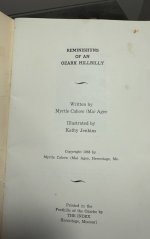
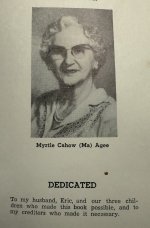
They are sure to ask, did she really hate that dad blasted old Roosevelt, or was that just satire?
And my reply is, the Roosevelt hating was most likely due to Kathy “Nanny” Jenkins who owned The Index and was the first female Superintendent of Schools of Hickory County and Ma Agee who was married to the wealthiest landowner in Hickory County and 1901 graduate of Weaubleau Christian College under Whitaker, both being descendants of Union cavalrymen and conspiring to carry on the noble work of the Prohibitionists and Suffragettes who hated drunken, worthless men who stayed drunk while their wives worked their farms and took in laundry and cleaned wealthy women’s homes and popped out a baby every year until they died young.
Otherwise why did Ma Agee and Nanny Jenkins both idolize Inex Mullholland?
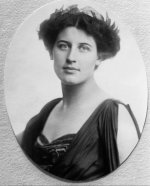

en.m.wikipedia.org
And I’ll add of her seven grandchildren the five now living, I’m a lawyer, two are schoolteachers, one is the beautiful widow of a multimillionaire, and one is the proud mother of the President of a Teamsters Union of Kansas City Missouri.
And when we get together we always sing Ma Agee’s favorite song.
Deportees
Roosevelt’s greatest mistake was legalizing 3.2% beer, right out of the gate.
——
The
Cullen–Harrison Act, named for its sponsors, Senator
Pat Harrison and Representative
Thomas H. Cullen, enacted by the
United States Congress on March 21, 1933, and signed by President
Franklin D. Roosevelt the following day, legalized the sale in the United States of beer with an
alcohol content of
3.2% (by weight) and wine of similarly low alcohol content, thought to be too low to be intoxicating, effective April 7, 1933. Upon signing the legislation, Roosevelt made his famous remark, "I think this would be a good time for a beer."
—-
Nine months later and it would have been the will of the people, you know?
Xxxxx
On taking office, Hoover urged Americans to obey the
Eighteenth Amendment and the
Volstead Act, which had established
Prohibition across the United States.
[216] To make public policy recommendations regarding Prohibition, he created the
Wickersham Commission.
[217] Hoover had hoped that the commission's public report would buttress his stance in favor of Prohibition, but the report criticized the enforcement of the Volstead Act and noted the growing public opposition to Prohibition. After the Wickersham Report was published in 1931, Hoover rejected the advice of some of his closest allies and refused to endorse any revision of the Volstead Act or the Eighteenth Amendment, as he feared doing so would undermine his support among Prohibition advocates.
[218] As public opinion increasingly turned against Prohibition, more and more people flouted the law, and a grassroots movement began working in earnest for Prohibition's repeal.
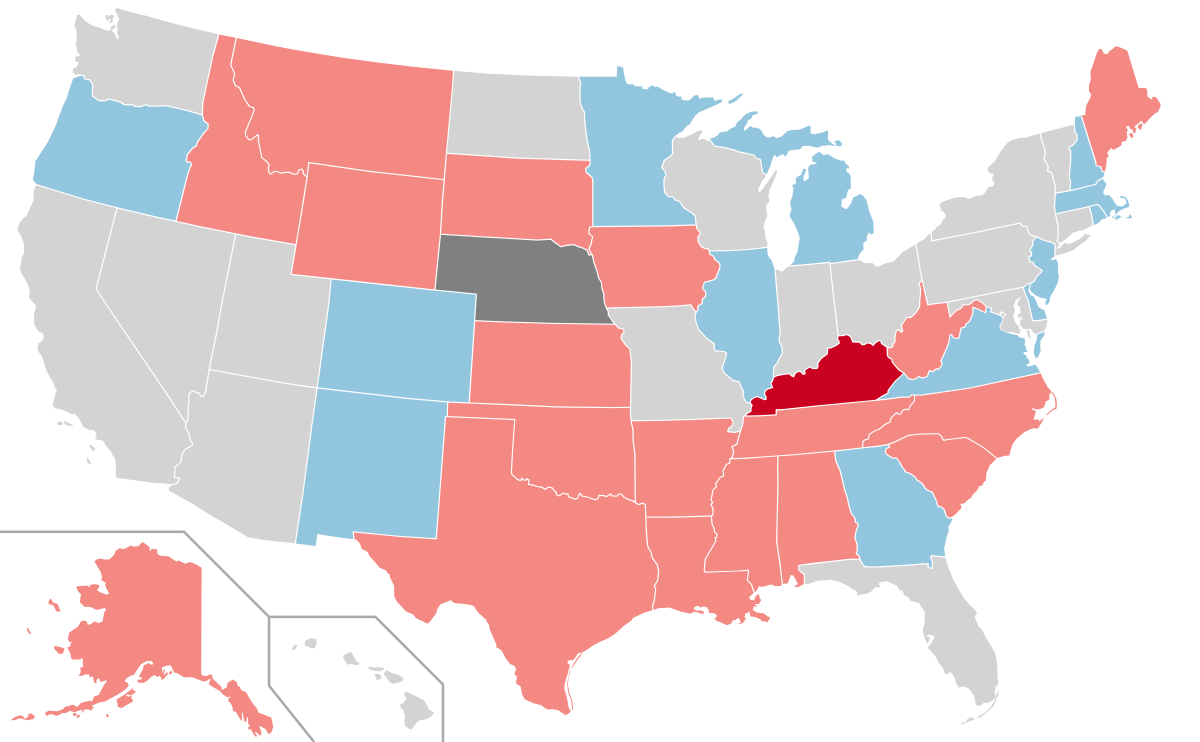
[219] In January 1933, a constitutional amendment repealing the Eighteenth Amendment was approved by Congress and submitted to the states for ratification. By December 1933, it had been ratified by the requisite number of states to become the
Twenty-first Amendment.
[220]
Xxxx