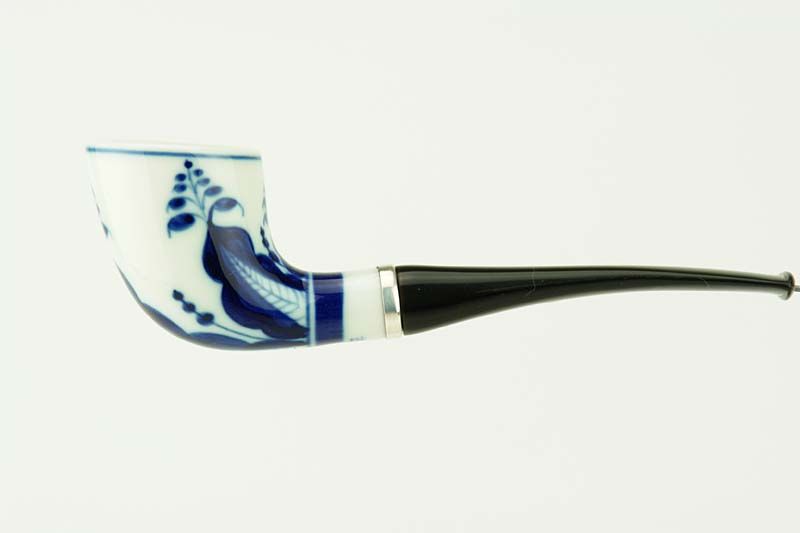
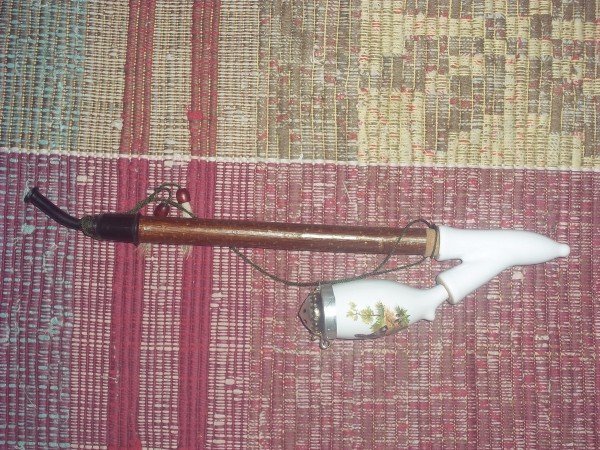
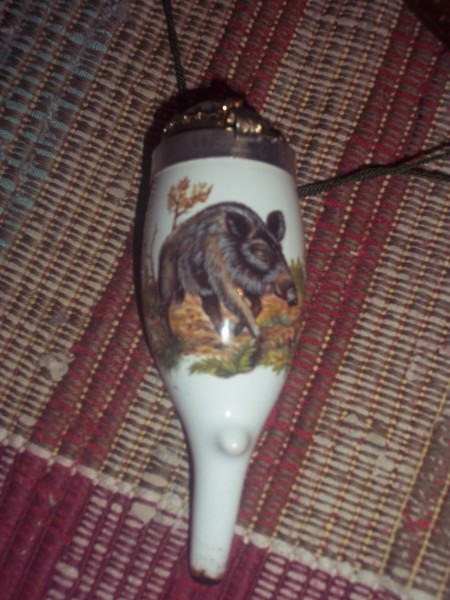
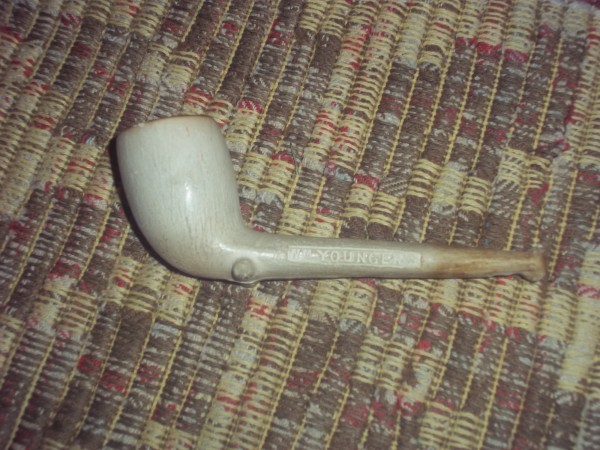
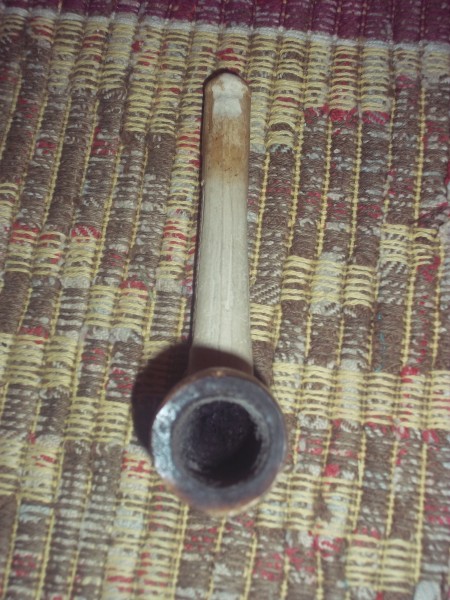
I've just got a box load of these dating back to before WWI, however I know absolutely nothing about porcelain pipes. Is there anyone here who can point me in the right direction?
Edit: Corrected capitalization in title, L.
I've just got a box load of these dating back to before WWI, however I know absolutely nothing about porcelain pipes. Is there anyone here who can point me in the right direction?
Edit: Corrected capitalization in title, L.
I've a little experience with them, and there's several threads on them. What would you like to know?
Pictures help with pipe knowledge
Junior Member of the Black BloodsI have one that inherited from a relative. It's a double-walled pipe, half bent -- sort of like a calabash, but the top doesn't come off or anything. I am afraid to smoke it. The glaze over the porcelain has cracked all over the bowl, although that doesn't appear to have effected the pipe otherwise. I'm afraid that the thing would get BLAZING hot. I have so many other pipes that I like and use, so I just kind of keep this one as an ornamental/decorative object on the mantle. I'd appreciate any tips from those of you who have one like that.
I don't know where to direct you but I can give you the gist of what I have read lately about them.
Porcelain pipes have been around since the 1700s when clay was the only other widespread alternative.
They are similar to clays but are larger and often made just as bowls to fit into wooden stems.
They are typically very ornate and hand painted with great detail. Many of them include decorated wind caps.
"The standard shaped porcelain pipes come principally from the Royal Goedewaagen factory in Gouda, the Netherlands, and are offered in a variety of artistic finishes, ranging from pure white to a stain resembling the reddish-brown of a well-seasoned meerschaum. This factory also makes the famous Baronite pipe, which is a double-walled porcelain pipe. One of the major disadvantages of porcelain pipes, as with clays, is that they become extremely hot, making them difficult to hold. The air space between the inner and outer bowl walls of the notable Baronite acts as an insulator, keeping the bowl cooler and more comfortable in the hand. The air space also increases the dryness of the smoke, an effect also found in the calabash gourd pipe."
Finally, the best copies of antique porcelain pipes came from German and Yugoslavian factories in years past. (Though they are now probably just as hard to find as the originals!)
I hope that helps to some degree...
*The above was summarized and/or quoted from 'The Book of Pipes & Tobacco' by Carl Ehwa Jr. (1974)
I consulted two other notable pipe books but they scarcely mentioned porcelain pipes, let alone provide much information about them.
Some repeated points were: popular in Central Europe, heyday in the 19th century, mostly ornamental...
I have a feeling that porcelain pipes were made very unpopular by meerschaum and absolutely wiped out by briar as the 19th century progressed.
If nobody else has any answers for you, then Google is going to have to be your best friend...
Many thanks for all the replies and my apologies for not answering sooner I was unaware that any answers had been posted!
I believe many use a porcelain pipes to test new tobacco since it can be cleaned thoroughly between smokes (????).
I had one years ago made by Royal Goedewaagen. It was an apple shape with a double wall and had a windmall painted on it in Delft blue. It was as hot smoking as a clay pipe, even with the double bowl. The white portion at the bottom of the bowl near the junction with the stem turned brown, even though I rarely smoked it.
Eventually it broke and I threw it away. I never really enjoyed smoking it.
The other style that is quite common is the Bavarian pipe. It usually has a cherrywood stem, a wind cap and ornate decorations on the bowl. Many of these pipes commemorate a military unit or some other organization.
I have never heard anybody praising the smoking qualities of porcelain pipes.
"I believe many use a porcelain pipes to test new tobacco since it can be cleaned thoroughly between smokes"
I've heard this too. But in 25 years of smoking a pipe and after attending dozens of pipe shows, I've NEVER seen ANYONE actually smoking a porcelain pipe.
If I had one, I'd probably put it on a shelf and admire it but I doubt I'd ever smoke it. I guess I just like briar too much.
I got one in the Netherlands while living in Europe, as a novelty. It was quite pretty. A few years later, one of the kids was playing with it and dropped it. End of story. I never got another.
I have never heard of porcelain pipes being used to test blends, but I have heard of clay pipes being used.
You must log in to post.
Back To Top | Back to Forum Home Page
Members Online Now
ghost, robertnyc, wyfbane, uberam3rica, rothnh, kalvort, numbersix, roadqueen, tennsmoker, dlattim, extrasample, tbradsim1, ejames, dochudson