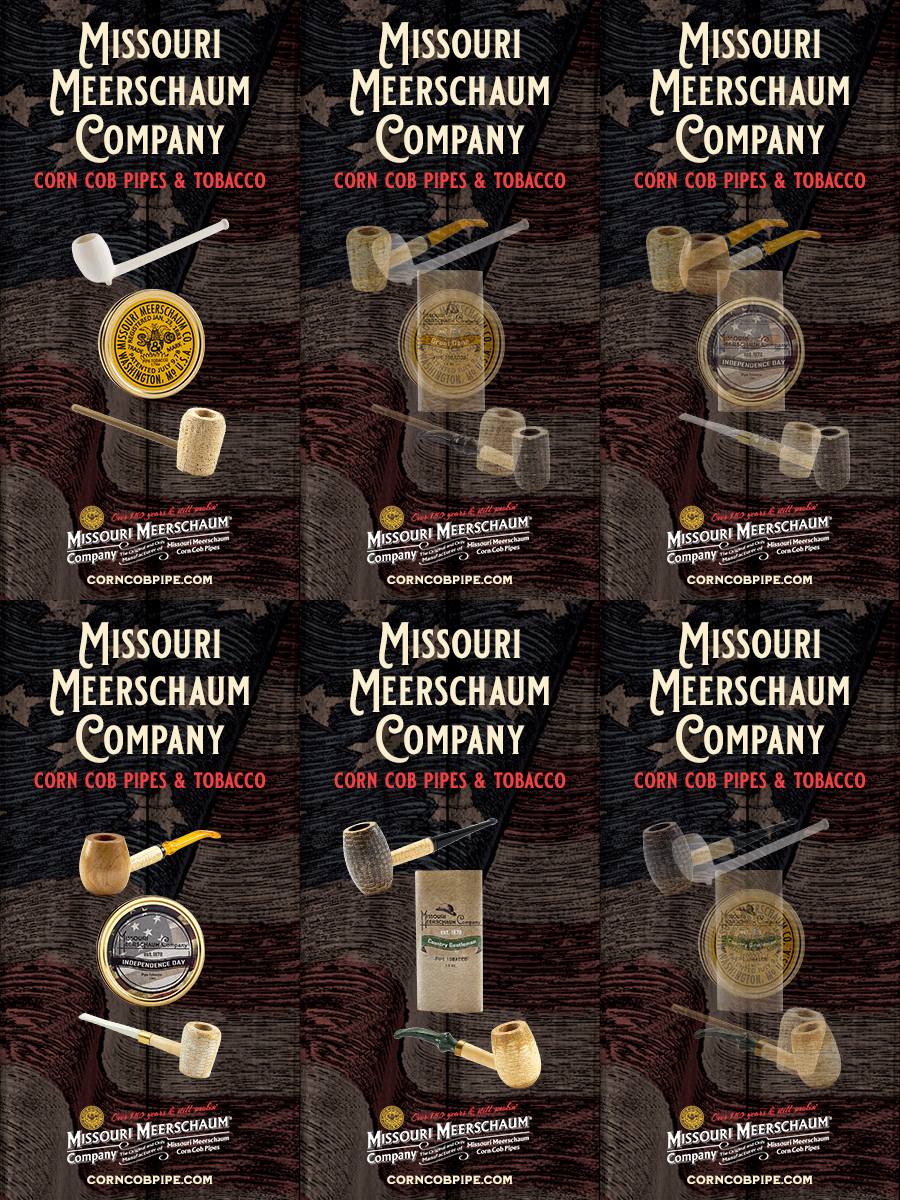
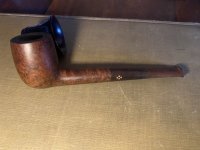
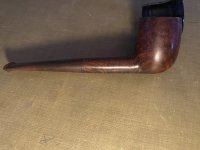
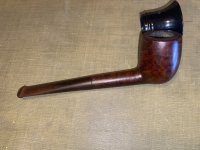
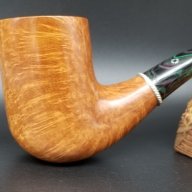
Sasieni (Fish-tail Scrip) Restore, or Not.

Log in

SmokingPipes.com Updates

Watch for Updates Twice a Week

PipesMagazine Approved Sponsor

PipesMagazine Approved Sponsor

PipesMagazine Approved Sponsor

PipesMagazine Approved Sponsor

PipesMagazine Approved Sponsor

Strandsbeachlocal

Might Stick Around
Nov 23, 2021
74
424
Washington,USA
As the title says, I’m mulling over whether to do some light restoration on my Sasieni pipe or leave it as is. I have limited previous restoration experience but would consider sending it out if I decide to restore it. Any input or advice would be greatly appreciated!"
 

Attachments

  • IMG_6665.jpeg
    IMG_6665.jpeg
    170.4 KB · Views: 41
  • IMG_6662.jpeg
    IMG_6662.jpeg
    178.8 KB · Views: 42
  • IMG_6654.jpeg
    IMG_6654.jpeg
    238.2 KB · Views: 44
  • IMG_6637.jpeg
    IMG_6637.jpeg
    161.9 KB · Views: 43
  • IMG_6659.jpeg
    IMG_6659.jpeg
    167.8 KB · Views: 42

georged

Lifer
Mar 7, 2013
6,830
19,888
Sasieni nomenclature is shallow and delicate.

More good pipes have been permanently transformed into Shiny Things That Still Smoke But Are Otherwise Worthless from buffer blasting by idiots who haven't a clue than every other cause put together.

Just sayin'...
 

sablebrush52

The Bard Of Barlings
Jun 15, 2013
22,960
58,319
Southern Oregon
jrs457.wixsite.com
Just took a close look, there's heavy cake buildup inside the bowl and some significant oxidation on the stem. These seem to be the main issues for restoration.
Removing cake and removing oxidation are both things that you can do yourself if you don't want to send it out.

To remove cake I use a Pipnet to start and then finish with glass paper wrapped around a Pilot marker or just wrapped around my finger. If you have the gear, buy yourself a piece of wood doweling smaller than the width of the caked up chamber, file round one end, wrap it with glass paper held in place with a rubber band and carefully gently sand down the cake. Take care not to sand the rim of the pipe.

Scrub out the airway with a nylon shank brush dipped in alcohol and keep cleaning the shank brush as you go. Take care to avoid getting alcohol on the stained exterior. Get yourself some B J Long tapered bristle pipe cleaners, dip them in in alcohol, to further extract gunk from the shank airway.

To clean the stem airway I would get some White Elephant brand bristle pipe cleaners. The bristles are a bit softer than the B J Long pipe cleaners, so they won't score the Vulcanite. Also, the White Elephant brand pipe cleaners have a far more robust wire core, so they won't bend and collapse like the B J Long pipe cleaners.

To clean out the mortise, double over a tapered B J Long bristle pipe cleaner twice so that if forms a wad, twist it into the mortise and twist it around and around to loosen up the crud in the mortise. Use as many wads as necessary to get the mortise clean. Some people use dental tools to scrape the crud out of the corners.

If the stem is only slightly "oxidized" you can try toothpaste with a cloth to remove it. If that doesn't do the job, get yourself a set of Micromesh pads and sand down the surface under running water, starting with a coarser grade to remove oxidation and working to the finer grades, which will polish the Vulcanite to a high gloss. Again, work gently so as not to soften the line of the stem and button.

 

Strandsbeachlocal

Might Stick Around
Nov 23, 2021
74
424
Washington,USA
Removing cake and removing oxidation are both things that you can do yourself if you don't want to send it out.

To remove cake I use a Pipnet to start and then finish with glass paper wrapped around a Pilot marker or just wrapped around my finger. If you have the gear, buy yourself a piece of wood doweling smaller than the width of the caked up chamber, file round one end, wrap it with glass paper held in place with a rubber band and carefully gently sand down the cake. Take care not to sand the rim of the pipe.

Scrub out the airway with a nylon shank brush dipped in alcohol and keep cleaning the shank brush as you go. Take care to avoid getting alcohol on the stained exterior. Get yourself some B J Long tapered bristle pipe cleaners, dip them in in alcohol, to further extract gunk from the shank airway.

To clean the stem airway I would get some White Elephant brand bristle pipe cleaners. The bristles are a bit softer than the B J Long pipe cleaners, so they won't score the Vulcanite. Also, the White Elephant brand pipe cleaners have a far more robust wire core, so they won't bend and collapse like the B J Long pipe cleaners.

To clean out the mortise, double over a tapered B J Long bristle pipe cleaner twice so that if forms a wad, twist it into the mortise and twist it around and around to loosen up the crud in the mortise. Use as many wads as necessary to get the mortise clean. Some people use dental tools to scrape the crud out of the corners.

If the stem is only slightly "oxidized" you can try toothpaste with a cloth to remove it. If that doesn't do the job, get yourself a set of Micromesh pads and sand down the surface under running water, starting with a coarser grade to remove oxidation and working to the finer grades, which will polish the Vulcanite to a high gloss. Again, work gently so as not to soften the line of the stem and button.

Thank you for the reply sable, I appreciate it very much. Do you have any input on using a hairdryer and or heat gun for removing light tooth dents?

I have done a few stem rejuvenations with the method you described on old Ehrlich pipes. They always turn out good as new. I find some of the “hippy” mineral toothpastes to work out great.

This pipe only has the 30 marking on the shank, does this offer some clues to the date? Or am I to assume the other identifiers are missing.
 
  • Like
Reactions: sablebrush52

beefeater33

Lifer
Apr 14, 2014
4,320
6,984
Central Ohio
Removing cake and removing oxidation are both things that you can do yourself if you don't want to send it out.

To remove cake I use a Pipnet to start and then finish with glass paper wrapped around a Pilot marker or just wrapped around my finger. If you have the gear, buy yourself a piece of wood doweling smaller than the width of the caked up chamber, file round one end, wrap it with glass paper held in place with a rubber band and carefully gently sand down the cake. Take care not to sand the rim of the pipe.

Scrub out the airway with a nylon shank brush dipped in alcohol and keep cleaning the shank brush as you go. Take care to avoid getting alcohol on the stained exterior. Get yourself some B J Long tapered bristle pipe cleaners, dip them in in alcohol, to further extract gunk from the shank airway.

To clean the stem airway I would get some White Elephant brand bristle pipe cleaners. The bristles are a bit softer than the B J Long pipe cleaners, so they won't score the Vulcanite. Also, the White Elephant brand pipe cleaners have a far more robust wire core, so they won't bend and collapse like the B J Long pipe cleaners.

To clean out the mortise, double over a tapered B J Long bristle pipe cleaner twice so that if forms a wad, twist it into the mortise and twist it around and around to loosen up the crud in the mortise. Use as many wads as necessary to get the mortise clean. Some people use dental tools to scrape the crud out of the corners.

If the stem is only slightly "oxidized" you can try toothpaste with a cloth to remove it. If that doesn't do the job, get yourself a set of Micromesh pads and sand down the surface under running water, starting with a coarser grade to remove oxidation and working to the finer grades, which will polish the Vulcanite to a high gloss. Again, work gently so as not to soften the line of the stem and button.

I LOVE those long bj’s……. Been awhile though…..
 

sablebrush52

The Bard Of Barlings
Jun 15, 2013
22,960
58,319
Southern Oregon
jrs457.wixsite.com
Thank you for the reply sable, I appreciate it very much. Do you have any input on using a hairdryer and or heat gun for removing light tooth dents?

I have done a few stem rejuvenations with the method you described on old Ehrlich pipes. They always turn out good as new. I find some of the “hippy” mineral toothpastes to work out great.

This pipe only has the 30 marking on the shank, does this offer some clues to the date? Or am I to assume the other identifiers are missing.
I haven't done that myself, so others may want to chime in here. My understanding is that heat will lessen the dents, as Vulcanite has memory and heat causes it to return to its original shape, but not completely get rid of deep tooth marks. Certainly won't hurt. There are some videos on YouTube by George Dibos and Walt Cannoy that may be useful. George is as knowledgeable about restoration as it gets. Cannoy has a demo on applying heat to Vulcanite to restore it's original shape that I found very helpful.
 

OzPiper

Lifer
Nov 30, 2020
8,081
46,313
73
Sydney, Australia
That’s a nice family era Four Dot Sasieni.
I’d send it off to be cleaned up.
I’d practise on a few less collectible pipes before trying my hand on that.
 
  • Like
Reactions: jguss

ssjones

Moderator
Staff member
May 11, 2011
19,977
15,676
Covington, Louisiana
postimg.cc
Thank you for the reply sable, I appreciate it very much. Do you have any input on using a hairdryer and or heat gun for removing light tooth dents?

I have done a few stem rejuvenations with the method you described on old Ehrlich pipes. They always turn out good as new. I find some of the “hippy” mineral toothpastes to work out great.

This pipe only has the 30 marking on the shank, does this offer some clues to the date? Or am I to assume the other identifiers are missing.
A hair dryer won't have any real effect removing teeth indentations, but as Jesse said, you can't hurt it.
 

Stonemonk

Lurker
Sep 11, 2022
22
37
Rhode Island USA
I agree with SableBrush52's advice. Pipenet reamer followed by sandpaper wrapped around a wooden dowel, as he says, being careful not to sand the rim. Not the color of the carbon on the sandpaper: if it's black, carbon is coming off. But if it starts to get lighter and turn brownish. you have gone too far and are now sanding the original wood of the bowl's interior. I also agree: No more polishing; you don't want to lose the nomenclature any further. I often follow the sanding with a strong paper towel dabbed in alcohol to wipe out any residual carbon dust. As for getting rid of the stem oxidation, be careful NOT to accidentally remove the dots with whatever method you use. I have used several products that were 75% effective but removed the dots. They are a really important aspect of the value of the pipe: produce them at all costs!