


I know.I was joshing, I’m a micromesh and obsidian fan.






I know.I was joshing, I’m a micromesh and obsidian fan.
It’s a Parker, so it’s the brownish stuff. That’s a better quality rubber and will clean up nice. I would say the white stuff is environmental.Have you seen this red stuff? I don't know how well you can see from the photo, but it was a very thick and hard, dark red oxidation with a few white crystals on the surface... I would guess a combination between material formula, climate and maybe even some contaminant. I have seen it on old unsmoked pipes only. Very hard to take off...
View attachment 415436

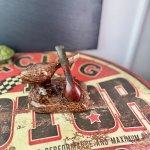

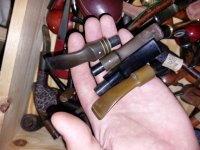

Oddly enough, vulcanized rubber can bloom crystals.I would say the white stuff is environmental.
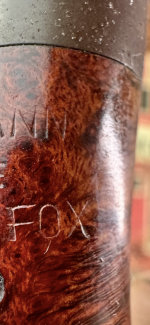
I enlarged the FOX pic a lot. Looks like that crud is actually pitting the rubber. Haven’t seen that before.Oddly enough, vulcanized rubber can bloom crystals.

You see how crisp the logo of the Parker was- it was almost gone after the oxy bath and steel wool and I am sure that most of it was heavily pitted and structurally made out of the reddish oxidationI enlarged the FOX pic a lot. Looks like that crud is actually pitting the rubber. Haven’t seen that before.
In my and a few other friend's experience - one of the best quality vulcanite, one that is easy to deoxidize and stays black longer is found on old french pipes. The one mark of this specific vulcanite are the sprinkle of white/metal dots all over - apparently added lead particles. Still doing research on the subject.Vulcanite quality runs the spectrum from still looks like black glass after 90 years, to bite zones that will turn military drab green 24 hours after getting saliva on them (and the entire stem a few months later), and everything in between
Not to mention voids and inclusions. Some have none, others are like Swiss cheese with bits-O-crap throughout (often metal chips).
The pipe's brand or grade within a brand doesn't necessarily matter, either. (While cheap pipes never have good rubber, expensive ones don't necessarily have it.)
Bottom line? There are far too many variables for a given "system" to keep black, black. Except for one: Clean thoroughly after every use with tissue paper followed by a microfiber cloth, and then store in complete darkness. Either a light-tight cabinet or drawer, or pipe sock made from dense material.
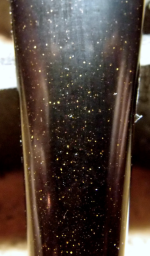
Yes, that's exactly what I am talking about!

I enlarged the FOX pic a lot. Looks like that crud is actually pitting the rubber. Haven’t seen that before.
I have, an old Grabow I own has it.I enlarged the FOX pic a lot. Looks like that crud is actually pitting the rubber. Haven’t seen that before.

Perfect solution for display pipes, you loose me though if I have to put the pipe in my mouthI'd suggest a paradigm shift. With time and dedication the vulcanite will develop a delightful patina, like properly used silverware, which enhances the stem's character and appearance. Wear it proudly

Who likes black glossy stems anyway....Perfect solution for display pipes, you loose me though if I have to put the pipe in my mouth

I know! Can you believe some people are actually paying more for acrylic "cheater" stems that attempt to short-cut the process with pre-fab swirls and such?Who likes black glossy stems anyway....
All of the stems I showed were or will be completely deoxidized before they see any kind of use. Just FYISlightly off topic, but seeing photos in this thread of old, heavily oxidized stems, makes me rethink my opinions on vulcanite stems. I usually prefer acrylic because they are easier to maintain and keep shiny. But some of those oxidized stems look beautiful in all their wear and tear. I always endeavor to take good care of my pipes, but I think I am going to stop worrying about oxidation so much. I think there is a beauty to it. Sentimental, I know.
There are a lot of very simple things that would work very well if combined with a small doze of prevention, but only for stems that have been completely deoxidized and then taken care of. On the other side some of the stems I showed haven't been used in over 50 years - absolutely nothing will work on them if you don't physically remove the thick layer of oxidation first.Seriously though, all I've ever used for polish is toothpaste, and followed up with stem oil. Takes some scrubbing but it works well.