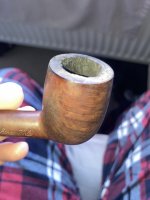
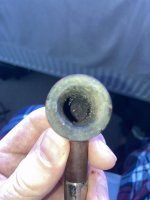
Hello ladies and gentlemen.
Whilst clearing a loved ones loft out I came across this. I’m only just starting to understand who Barlings were and I’ve noticed something unusual with these pipes.
If you look at the stamped inlay inside the case it states “Barlings Special London Make”
In every picture I can find on cased pairs or singles online they are stamped “Special Barlings London Make”
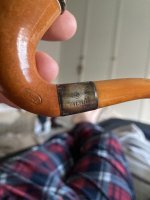
On the side of the pipe there are the words “Barling’s Make” and on the opposite side “Harry Kirby”
If anyone can shed some light on anything about these pipes it would be most helpful thank you!
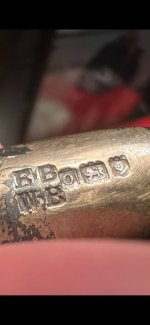
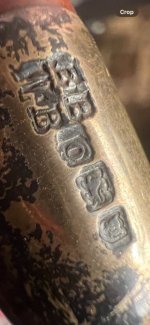
View attachment 395851View attachment 395852View attachment 395853View attachment 395854
Congratulations on your find!
There doesn't seem to be much for me to add at this point, but I'll say this.
The crispness and depth of the hallmarks suggests that the pipes were little used, as hallmarks tend to wear down, especially if buffed.
The crocodile case looks to be in exceptional condition, almost new, again pointing to light use.
Without seeing photographs of the rims, and stems it's difficult to assess value. Also, the size of the pipes is a factor. Show me images and measurements and I can more confidently give you a range of value.
OzPiper's $1000 assessment is a good median point. The set could be worth $800 to $1200, or more, once the pipes have been properly cleaned. Is there any other nomenclature on the opposite side of the shank or on the exterior of the case, that would identify the tobacconist who sold them?
The only concern I have is your use of the term, "loft". Pipes that have been stored in an attic space and exposed to heat for long periods can suffer irreparable damage. They look great, but briar becomes super brittle and falls apart like sawdust.
Should you decide to smoke them, thoroughly clean them and before smoking, coat the chamber walls with a silicate coating. George Dibos, georged on the forum, can help you with that step.
Century old pipes that have not been smoked for many decades are fragile and subject to cracking, so the silicate helps guard against that possibility. Slow smoke them so that the bowls do not get more than barely warm for the first dozen or so smokes, taking a few sips and setting the pipe down to cool, then repeat. Once carbon has coated the silicate, you can then smoke them with care.
To clean the sterling silver, I recommend Simichrome polish. Protect the briar with low tack painter's tape when doing this. Try to avoid using a buffer, unless you are experienced and have a deft light touch. Otherwise use Renaissance wax, and just a tiny amount of it.
I don't know if the manufacturer of the Calabash has been identified, but based on the makers mark it is William Harrison of Birmingham U. K., who made a lot of Calabashes. The date is 1907.




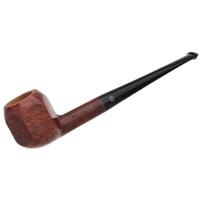
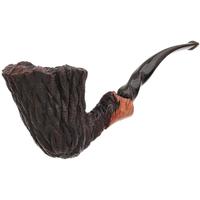



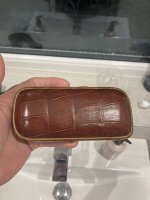
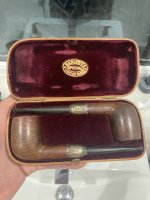



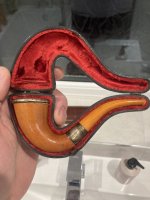

 the whole loft was full of 70’s and 80’s novel kitchen and camping equipment and in this little box were these 2! Any idea on value? I might need to add them onto my home insurance if they are worth anything. Although I have no paperwork just the photos I’ve taken


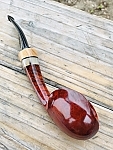
 Congratulations!