







Dating Clay Pipes

Log in

SmokingPipes.com Updates

Watch for Updates Twice a Week

PipesMagazine Approved Sponsor

Drucquers Banner

PipesMagazine Approved Sponsor

PipesMagazine Approved Sponsor

PipesMagazine Approved Sponsor

PipesMagazine Approved Sponsor

MisterBadger

Lifer
Oct 6, 2024
1,249
11,144
Ludlow, UK
I dug up this humble piece of clay pipe stem in the garden the other day. These are a not infrequent find heareabouts and I just used to toss them aside as of no interest, because I'd always assumed you need the bowl shape to identify the period in which it was made. Turns out I was wrong: the thickness of the stem/shank and the diameter of the air hole gives you an approximate guide to within just a few decades. This one is 6/64ths of an inch, which gives it a 72% probability of being in the date range 1680-1710.

The method is accurate on both sides of the Pond. Thought it might be of interest to some.
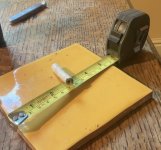
Clay Stem Dec 25.jpg
 

Attachments

  • Harrington’s histogram of pipe-stem measurements grouped by time perio.jpg
    Harrington’s histogram of pipe-stem measurements grouped by time perio.jpg
    73 KB · Views: 11

MisterBadger

Lifer
Oct 6, 2024
1,249
11,144
Ludlow, UK
that's just awesome. In a strange way they're that time periods equivalent of a cigarette butt. So funny to think that someone enjoyed that pipe and to wonder what they thought of cadence.
...the garden was a garden then, and I also wonder what the smoker of that pipe was growing there. And what he liked to smoke in that pipe. And what he considered the best kind of feather for cleaning his pipes. And what he thought of the 1688 Revolution and the Protestant Suceession. And the rest... :)
 

MisterBadger

Lifer
Oct 6, 2024
1,249
11,144
Ludlow, UK
Fascinating!
Any idea what they might have been smoking back then?
Tonquin and deertongue and kinnickinnick (bearberry) were all known as tobacco additives in 17thC England by then, and N. rustica as well as N. tabacum, and I've also come across something called 'crocus' as a first-class expensive tobacco which, if you look at the pistils of a saffron crocus, suggests a shag-cut red Virginia. Apparently most tobacco came over to Europe as rope twists - perhaps similar to those Gawith and Hoggarth still produce - and by the late 17thC, they were growing their own in the Netherlands: I wonder if this was at all like the Belgian Semois we get nowadays?