





As a fan of Barling pipes and a student of the brand's history, which goes back to 1812, an event of this kind presents more than just an opportunity to add some vintage pipes to my collection, it adds an opportunity to learn more about the brand. At this stage in my collecting, the latter opportunity is by far the more important.
The items up for auction were nothing less than outstanding and they offered an unparalleled opportunity to learn more about the brand. All of these pipes are unsmoked. So let's begin.
To the best of our knowledge, Barling had begun making a percentage of their briar pipes wholly in house around 1897. This auction solidly pushes that date earlier to 1887. There were several pipes stamped "Barling's Make", which indicates the pipes was entirely made in the Barling factory, with hallmarks dating to 1891. Here is one example, a cased bulldog:

Here's the detail with both the Barling's Make logo stamp and the 1891 Hallmark:
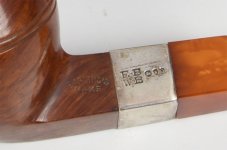
We also may have confirmation of an even earlier Barling's Make stamp from 1887, no arch, just a block Barling over Make. The blow up is a little blurry, and there is another pipe like this that is clearer, but this is earlier, dated to 1887:

There were display cases of Barlings in shapes that I had never before seen:
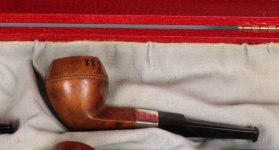
There were beautiful cased companion sets, like this one from 1921:

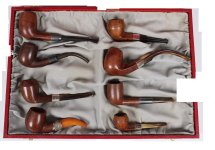
And cased set of pipes, again, all unsmoked:

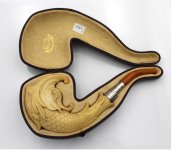
There were a number of meerschaum pipes including this amusing Art Deco influenced fish shaped pipe from 1929:
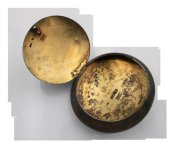
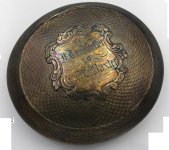
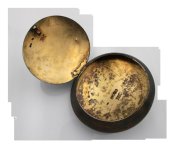
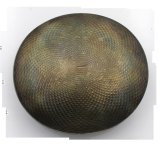
And also this silver Victorian Tobacco Box, which I won. There's something historically very special about it, which other buyers missed, so I got it for a very advantageous price. Look closely and see if you can figure out what I spotted. I'll reveal this later:
I'll be posting a more extensive set of images to the Barling page on Pipedia in the near future. I Hope that you found this interesting.
The items up for auction were nothing less than outstanding and they offered an unparalleled opportunity to learn more about the brand. All of these pipes are unsmoked. So let's begin.
To the best of our knowledge, Barling had begun making a percentage of their briar pipes wholly in house around 1897. This auction solidly pushes that date earlier to 1887. There were several pipes stamped "Barling's Make", which indicates the pipes was entirely made in the Barling factory, with hallmarks dating to 1891. Here is one example, a cased bulldog:
Here's the detail with both the Barling's Make logo stamp and the 1891 Hallmark:
We also may have confirmation of an even earlier Barling's Make stamp from 1887, no arch, just a block Barling over Make. The blow up is a little blurry, and there is another pipe like this that is clearer, but this is earlier, dated to 1887:
There were display cases of Barlings in shapes that I had never before seen:
There were beautiful cased companion sets, like this one from 1921:
And cased set of pipes, again, all unsmoked:
There were a number of meerschaum pipes including this amusing Art Deco influenced fish shaped pipe from 1929:
And also this silver Victorian Tobacco Box, which I won. There's something historically very special about it, which other buyers missed, so I got it for a very advantageous price. Look closely and see if you can figure out what I spotted. I'll reveal this later:
I'll be posting a more extensive set of images to the Barling page on Pipedia in the near future. I Hope that you found this interesting.